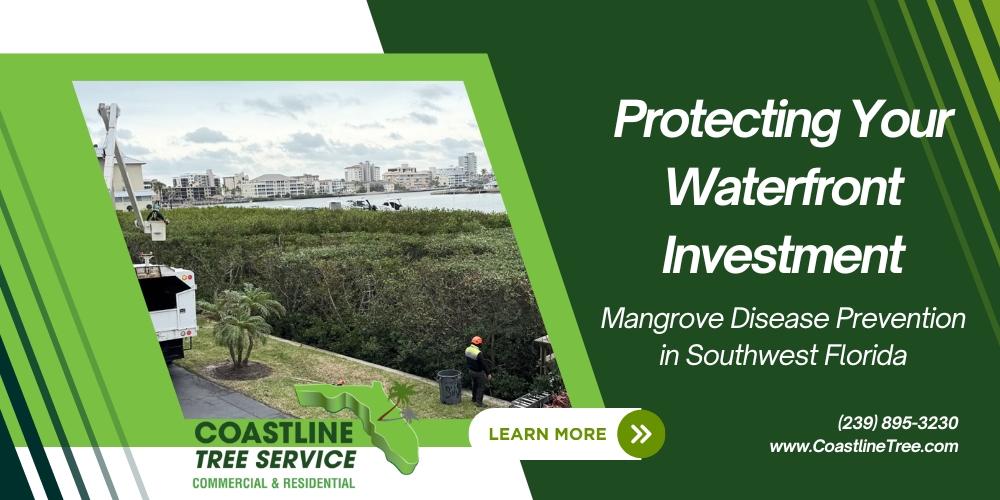
Living along Southwest Florida’s pristine waterways comes with incredible rewards — stunning views, direct water access, and the natural beauty of thriving coastal ecosystems that include Mangrove Trees. If you own property in Cape Coral, Bonita Springs, Naples, or Fort Myers Beach (or any part of Southwest Florida), chances are your shoreline features these magnificent trees, nature’s own coastal guardians that protect your property while supporting marine life.
But what happens when these vital trees fall victim to disease? Understanding mangrove health, particularly threats like Mangrove CNP (Colletotrichum gloeosporioides), could be the difference between maintaining your property’s value and watching your natural seawall deteriorate.
Why Mangroves Matter to Your Property
Mangroves aren’t just scenic additions to your waterfront — they’re working overtime to protect your investment. These remarkable trees stabilize shorelines, reduce erosion, and act as natural storm barriers. Since the 1940s, Florida has lost 86% of its mangroves, making the ones lining your property increasingly valuable.
Three species of mangroves call Southwest Florida home:
Red Mangroves — the “walking trees” with their distinctive stilt-like roots extending into the water
Black Mangroves — recognizable by their vertical breathing roots called pneumatophores
White Mangroves — typically found on higher ground with rounded, salt-excreting leaves
Each species requires specific care and attention, especially when disease strikes.
The Hidden Threat: Mangrove CNP Disease
Mangrove CNP, caused by the fungal pathogen Colletotrichum gloeosporioides, represents one of the most serious threats to mangrove health in our region. This aggressive disease can devastate entire mangrove stands if left unchecked, leaving property owners with dying trees and compromised shoreline protection.
Spotting the Warning Signs
Early detection saves trees — and your property. Watch for these telltale symptoms of Mangrove CNP:
Leaf Spots: Dark, circular lesions that start small and expand rapidly across leaf surfaces
Yellowing Foliage: Leaves turn yellow before dropping prematurely, creating sparse canopy coverage
Branch Dieback: Tips of branches begin dying back, working their way toward the main trunk
Bark Cankers: Sunken, discolored areas on bark that may ooze or crack
Stunted Growth: New growth appears weak, small, or fails to develop normally
Defoliation: Extensive leaf drop that leaves branches bare during growing season
The disease typically starts on younger leaves and shoots before spreading to mature parts of the tree. In humid conditions common to our area, the fungus spreads rapidly through water splash and wind-blown spores.
How CNP Destroys Your Mangroves
Mangrove CNP attacks the tree’s vascular system, disrupting the flow of nutrients and water. The fungus produces toxins that kill plant tissue, creating the characteristic spots and cankers. As the disease progresses, it compromises the tree’s ability to photosynthesize, eventually leading to branch death and, if untreated, complete tree mortality.
The economic impact extends beyond tree loss. Dead mangroves provide no erosion control, leaving your property vulnerable to storm damage and shoreline retreat. Replacement costs, permit requirements, and potential property damage make prevention and early treatment critical investments.
Environmental Factors That Increase Risk
Southwest Florida’s climate creates ideal conditions for Mangrove CNP development. High humidity, frequent rainfall, and warm temperatures accelerate fungal growth and spore dispersal. Properties with poor air circulation, overcrowded plantings, or stressed trees face elevated risk.
Stress factors that weaken mangrove immunity include:
- Salt spray damage from storms
- Nutrient deficiencies in sandy soils
- Root damage from boats or construction
- Improper pruning wounds
- Drought stress followed by heavy rains
Professional Mangrove Management: Why Expertise Matters
Managing diseased mangroves requires more than spotting problems — it demands specialized knowledge of treatment protocols, legal compliance, and proper pruning techniques. Florida’s Mangrove Trimming and Preservation Act strictly regulates how these protected trees can be handled, with violations carrying serious penalties.
Certified arborists trained in mangrove care (like our tree experts here at Coastline Tree Service) understand:
- Disease identification and treatment protocols
- Proper pruning techniques that promote healing
- Legal requirements for mangrove maintenance
- Safe application of fungicidal treatments
- Long-term management strategies
The Coastline Tree Service Advantage
As a State Authorized Professional Mangrove Trimmer licensed by Florida, our certified tree experts brings unmatched expertise to mangrove health management. Our certification ensures compliance with the Florida Mangrove Trimming and Preservation Act while delivering the specialized care your trees need.
Our comprehensive approach includes:
- Professional disease assessment and identification
- Targeted treatment plans for CNP and other mangrove diseases
- Proper pruning techniques that enhance tree health and views
- Ongoing monitoring to prevent disease recurrence
- Full regulatory compliance documentation
With years of experience serving waterfront properties throughout Southwest Florida, including HOA communities, private homes, and commercial properties, we understand the unique challenges facing mangrove owners in our region.
Treatment and Prevention Strategies
Effective Mangrove CNP management combines immediate treatment with long-term prevention. Professional treatment typically involves:
Fungicide Applications: Targeted spraying with copper-based or systemic fungicides during optimal weather conditions
Sanitation Pruning: Removal of infected plant material using sterile techniques to prevent spread
Improving Air Circulation: Strategic pruning to increase airflow through the canopy
Stress Reduction: Addressing underlying factors that weaken tree immunity
Monitoring Programs: Regular inspections to catch new infections early
Prevention strategies focus on maintaining tree health and minimizing stress factors:
- Proper irrigation during dry periods
- Avoiding mechanical damage to roots and bark
- Maintaining appropriate spacing between trees
- Regular professional inspections
- Prompt treatment of any stress factors
Legal Considerations for Property Owners
Florida law protects mangroves as essential coastal resources. The Mangrove Trimming and Preservation Act requires permits for many maintenance activities and mandates specific techniques to prevent tree damage. Property owners who attempt DIY disease treatment risk:
- Substantial fines for improper tree handling
- Required restoration costs if trees are damaged
- Legal liability for environmental damage
- Permit violations that complicate property sales
Working with licensed professionals like Coastline Tree Disease ensures full compliance while protecting your trees and investment.
Long-Term Property Benefits
Investing in professional mangrove disease management delivers lasting benefits:
Property Protection: Healthy mangroves provide superior storm protection and erosion control
Enhanced Values: Well-maintained waterfront landscaping increases property desirability
Regulatory Compliance: Proper care avoids costly violations and restoration requirements
Environmental Stewardship: Supporting mangrove health benefits the entire coastal ecosystem
Peace of Mind: Professional monitoring catches problems before they become expensive disasters
When to Call the Professionals
Don’t wait for obvious disease symptoms. Schedule professional inspections:
- Annually, preferably before the growing season
- After major storms or weather events
- When you notice any changes in tree appearance
- Before undertaking any waterfront improvements
- When buying or selling waterfront property
Early intervention costs significantly less than emergency tree removal and replacement while preserving your property’s natural protection.
Protecting Your Waterfront Legacy
Your mangroves represent more than landscaping — they’re living infrastructure protecting your property and supporting Southwest Florida’s coastal ecosystem. Mangrove CNP and other diseases pose real threats to these valuable assets, but professional management keeps them healthy and protective for generations.
The expertise required for proper mangrove disease management extends far beyond basic landscaping. It demands understanding of plant pathology, legal requirements, and specialized treatment techniques that only certified professionals possess.
Don’t gamble with your waterfront investment. The cost of professional mangrove care pales compared to storm damage from unprotected shorelines or the expense of emergency tree replacement under permit restrictions.
Ready to protect your mangroves and your property? We proudly serve and offer Mangrove Trimming Services all throughout Southwest Florida (Marco Island, Naples, Bonita Springs, Estero, Fort Myers, Fort Myers Beach, North Fort Myers, Sanibel, Lehigh Acres, Cape Coral, Babcock Ranch & Punta Gorda).
Contact us today to get started & schedule a consultation or request a free quote. at: (239) 895-3230 or online at: https://www.coastlinetree.com/contact-us/.
Your mangroves work tirelessly to protect your property — ensure they get the professional care they deserve.