Tree root pruning often gets overlooked in regular tree care, but this essential practice can save you thousands in property repairs and tree replacement costs. When done correctly, root pruning strengthens your trees while protecting your sidewalks, driveways, and foundation from expensive damage.
At Coastline Tree Service, we’ve seen firsthand how strategic root pruning transforms both tree health and property safety. This comprehensive guide reveals why root pruning deserves a place in your tree care routine and how it benefits both your landscape and your wallet.
Why Tree Root Problems Develop
Tree roots naturally grow outward and downward, seeking water and nutrients. In urban and suburban settings, this growth often conflicts with human infrastructure. Concrete sidewalks, driveways, and building foundations create barriers that force roots to grow in unnatural patterns.
Over time, these restricted root systems develop several problems:
– Girdling roots that wrap around the trunk, slowly strangling the tree
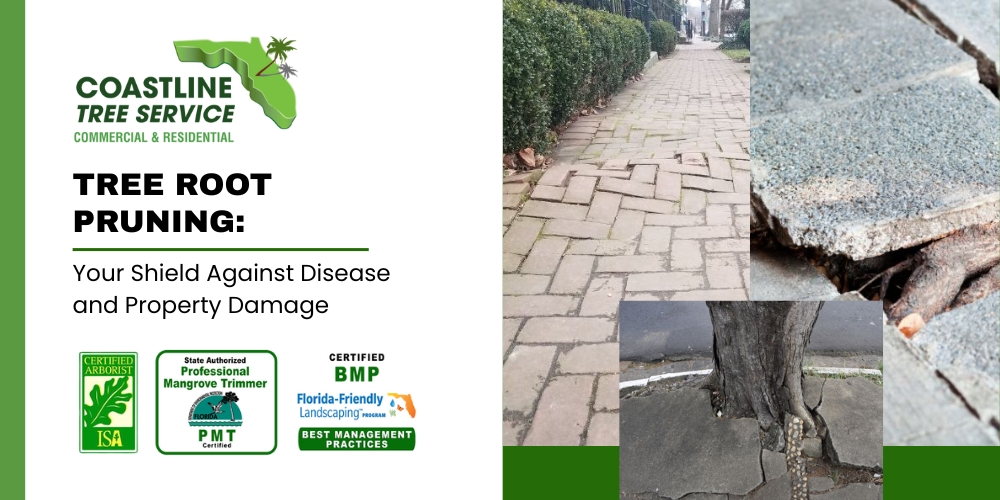
– Surface roots that buckle sidewalks and create trip hazards
– Compacted root zones that limit water and nutrient absorption
– Damaged roots that become entry points for diseases and pests
Without intervention, these issues compound over time, weakening trees and threatening nearby structures.
How Root Pruning Prevents Tree Disease
Removing Disease Entry Points
Damaged, decaying, or broken roots serve as highways for harmful pathogens. Fungi, bacteria, and other disease-causing organisms easily penetrate wounded root tissue and spread throughout the tree’s vascular system.
Strategic root pruning removes these compromised sections before diseases take hold. Clean cuts made with sharp, sanitized tools heal faster than jagged breaks caused by construction damage or natural decay.
Eliminating Girdling Roots
Girdling roots create a slow-motion disaster for trees. As these roots tighten around the trunk or major structural roots, they restrict the flow of water, nutrients, and sugars throughout the tree. This stress makes trees vulnerable to diseases they would normally resist.
Professional root pruning identifies and removes girdling roots before they cause irreversible damage. Trees with corrected root systems show improved vigor and disease resistance within one growing season.
Improving Soil Conditions
Compacted root zones create anaerobic conditions where harmful fungi thrive. Root rot diseases like Armillaria and Phytophthora flourish in waterlogged, oxygen-poor soil around damaged root systems.
Root pruning often includes soil decompaction and amendment, creating healthier growing conditions. Improved drainage and aeration help beneficial soil microorganisms outcompete harmful pathogens.
Encouraging New Growth
Young, healthy roots are more efficient at absorbing nutrients and water than old, damaged ones. Root pruning stimulates the growth of new feeder roots that strengthen the tree’s overall health and disease resistance.
This new root growth also helps trees recover from other stresses like drought, construction damage, or pest infestations.
Protecting Your Property Investment
Preventing Sidewalk and Driveway Damage
Surface roots can cause significant damage to concrete and asphalt surfaces. The average cost to repair root-damaged sidewalks ranges from $500 to $2,000 per section, while driveway repairs can exceed $5,000.
Root pruning redirects root growth away from hardscapes before damage occurs. This proactive approach costs far less than reactive repairs and protects property values.
Safeguarding Foundation Integrity
Large tree roots can exert tremendous pressure on building foundations. While roots rarely cause structural damage directly, they can worsen existing foundation issues and create pathways for water infiltration.
Strategic root pruning maintains safe distances between major roots and structures while preserving the tree’s stability and health.
Reducing Insurance Claims
Property damage caused by tree roots often falls outside standard homeowner’s insurance coverage. Preventive root pruning helps avoid costly out-of-pocket expenses for repairs to:
1) Cracked sidewalks and walkways
2) Damaged driveways and patios
3) Compromised foundation walls
4) Blocked or damaged sewer lines
5) Irrigation system breaks
Maintaining Landscape Value
Healthy trees with well-managed root systems contribute significantly to property values. Studies show that mature trees can increase property values by 10-20%, but only when they’re properly maintained and pose no structural risks.
Best Practices for Safe Root Pruning
Timing Matters
The ideal time for root pruning depends on your tree species and local climate. Generally, late fall through early spring works best, when trees are dormant and less likely to experience transplant shock.
Avoid root pruning during active growth periods or when trees are already stressed by drought, disease, or other factors.
The One-Third Rule
Never remove more than one-third of a tree’s root system in a single session. Excessive root pruning can destabilize trees and create more stress than it alleviates.
For severely compromised root systems, plan multiple pruning sessions spread over several years.
Proper Tool Selection
Sharp, clean tools make precise cuts that heal quickly. Use:
- Hand pruners for roots up to 1 inch diameter
- Loppers for roots 1-2 inches diameter
- Pruning saws for larger roots
Sanitize tools between trees to prevent disease transmission.
Cut Placement Technique
Make cuts just outside the branch collar – the swollen area where the root meets the trunk or parent root. This technique promotes faster healing and reduces the risk of decay.
Avoid leaving stubs, which invite disease, or cutting too close to the trunk, which can damage the tree’s natural healing process.
Root Zone Protection
After pruning, protect the root zone from foot traffic and soil compaction. Consider installing:
- Decorative barriers around the drip line
- Mulch beds to discourage walking
- Permeable pathways that allow root growth
When to Call Professional Arborists
Large or Mature Trees
Trees over 30 feet tall or with trunk diameters exceeding 12 inches require professional assessment. These trees have extensive root systems that support significant weight and wind loads.
Improper pruning of large trees can create hazardous conditions and void insurance coverage if the tree fails.
Proximity to Utilities
Underground utilities complicate root pruning projects significantly. Professional arborists coordinate with utility companies to locate buried lines and use specialized techniques to work safely around infrastructure.
Complex Disease Issues
Trees showing signs of root rot, decline, or systemic disease need expert diagnosis before any pruning begins. Sometimes root problems indicate larger issues that require comprehensive treatment plans.
Construction Sites
Root pruning around construction zones requires careful coordination with contractors and adherence to local tree protection ordinances. Professional arborists understand these requirements and can work within construction schedules.
The Coastline Tree Service Advantage
Our certified arborists bring decades of experience to every root pruning project. We use advanced techniques like air spading to expose roots without damage and can assess root health using specialized equipment.
Every job begins with a comprehensive evaluation of your trees’ condition, growth patterns, and potential conflicts with infrastructure. We develop customized pruning plans that balance tree health with property protection.
Our commitment to ongoing education ensures we stay current with the latest research in tree care and disease prevention. This knowledge directly benefits our clients through more effective treatments and longer-lasting results.
Taking Action for Healthier Trees
Tree root pruning represents a small investment that pays significant dividends in tree health and property protection. By addressing root problems proactively, you can avoid expensive repairs and enjoy healthier, more beautiful trees for decades.
Don’t wait for sidewalk cracks or declining tree health to signal root problems. Schedule a consultation with Coastline Tree Service today to assess your trees’ root systems and develop a preventive care plan that protects both your landscape investment and your property.
We proudly serve and offer Tree Services all throughout Southwest Florida (Marco Island, Naples, Bonita Springs, Estero, Fort Myers, Fort Myers Beach, North Fort Myers, Sanibel, Lehigh Acres, Cape Coral, Babcock Ranch & Punta Gorda).
Contact us today to get started & schedule a consultation or request a free quote. at: (239) 895-3230 or online at: https://www.coastlinetree.com/contact-us/.