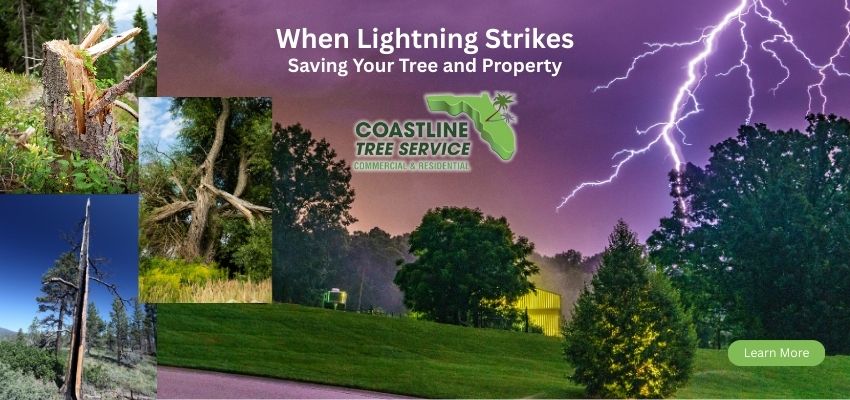
Here in Southwest Florida, lightning strikes are a real and frequent threat; especially as we enter the height of rainy and hurricane season. It’s not uncommon for trees in our area to be struck by lightning at any point over these stormy months. A lightning strike can deliver up to one billion volts of electricity, and the damage it inflicts on a tree can range from subtle to catastrophic. With storms rolling in almost daily, the risk to your property increases, making it vital to understand what can happen if lightning hits one of your trees and why being prepared is so important.
What Happens When Lightning Hits a Tree?
When lightning strikes a tree, the immense electrical charge travels down the trunk to the ground. The moisture within the tree’s layers instantly boils and turns to steam, causing an explosive expansion. This can result in a long, narrow strip of bark being blown off, or in more severe cases, the entire tree can be split apart.
The path of the lightning determines the type of damage. If the charge travels just beneath the bark in the cambium layer, it may leave a visible scar spiraling down the trunk. If the current travels through the tree’s core, the resulting steam explosion can shatter the tree from the inside out, causing it to fall or split into large, dangerous sections. The heat can also ignite the tree, leading to a fire that can spread to nearby structures.
Can a Lightning-Struck Tree Survive?
The survival of a lightning-struck tree depends entirely on the extent of the damage. A tree with only a shallow scar down one side has a reasonable chance of recovery. It has been wounded, but its vital systems for transporting water and nutrients may still be largely intact. However, a tree that has been split in half or has lost a significant portion of its bark is unlikely to survive.
Even if the tree appears stable, it’s important to consider secondary effects. The strike creates an open wound, making the tree highly vulnerable to disease and pest infestations. Borers, fungi, and other opportunistic organisms can invade the damaged tissue, leading to a slow decline over months or even years. Sometimes the damage is not immediately obvious, affecting the root system underground and causing the tree to die later.
Assessing the Damage: Your Next Steps
After a storm has passed and it is safe to go outside, your first step is to assess the situation from a distance. Look for downed power lines, large broken limbs, and signs of instability. If the tree is near your home, a commercial building, or power lines, you should treat it as an immediate hazard.
Do not attempt to remove debris or inspect the tree up close if there is any risk of falling branches. This is the time to call our professional arborist here at Coastline Tree Service. Our expert can safely evaluate the tree’s structural integrity. We will examine the entry and exit wounds of the lightning strike, check for cracks in the trunk and major limbs, and assess the overall health of the tree.
Treatment and Care for a Damaged Tree
If an arborist from Coastline Tree Service determines the tree is salvageable, a treatment plan can be developed. The first step is often to carefully prune away any broken or hazardous branches to prevent them from falling. This process, known as crown cleaning, reduces weight and helps the tree redirect its energy toward healing.
Next, we focus on promoting recovery. This involves removing any loose bark from the wound area to discourage pests from making a home there. While older methods involved “wound paint,” modern arboriculture advises against it, as it can trap moisture and inhibit the tree’s natural healing process. We will recommend proper watering and may suggest fertilization to provide the tree with the nutrients it needs to repair the damage and fight off potential infections.
When Removal is the Only Option
For both residential and commercial property owners, the safety of people and property is the top priority. Unfortunately, some trees cannot be saved after a severe lightning strike. A tree that is split, has lost more than half of its bark circumference, or shows signs of significant internal decay becomes a liability.
In these cases, professional tree removal is the safest and most responsible course of action. The team at Coastline Tree Service has the specialized equipment and expertise to dismantle and remove even the largest and most hazardous trees without causing further damage to your property. We handle the entire process, from the initial risk assessment to the final cleanup, ensuring your landscape is safe and clear.
How Coastline Tree Service Can Help
Whether you own a home or manage a commercial property, dealing with a lightning-struck tree can be overwhelming. Coastline Tree Service is here to help you navigate the process with confidence. We offer 24/7 emergency services to address immediate hazards following a storm. Our certified arborists provide thorough assessments to give you a clear understanding of your tree’s condition and your options.
From strategic pruning and recovery plans for trees that can be saved, to safe and efficient removal of those that cannot, we provide comprehensive care. We understand the value a mature tree adds to your property, and we will do everything possible to preserve it. When that’s not possible, we ensure its removal is handled professionally, protecting your property and giving you peace of mind.
Contact us today to assess your trees and develop a strategic plan for your affected trees. Give us a call at: (239) 895-3230 or contact us online at: https://www.coastlinetree.com/contact-us/.
We proudly serve and offer Emergency Tree Services all throughout Southwest Florida (Marco Island, Naples, Bonita Springs, Estero, Fort Myers, Fort Myers Beach, North Fort Myers, Sanibel, Lehigh Acres, Cape Coral, Babcock Ranch & Punta Gorda).